Did you know that leg injuries are one of the most common reasons for emergency vet visits? Dogs love to run, jump, and explore. However, their active lifestyle can sometimes lead to accidents. A sudden jump, an awkward landing, or a sharp object can cause a painful leg injury. Leg injuries can vary from minor cuts to serious fractures. First aid for dog leg injury is your first line of defense. Acting quickly with the right first aid steps can ease your dog’s pain and prevent the problem from worsening. Today’s post will show you how to care for your dog’s leg injuries and keep them safe until they receive professional treatment.
Signs of a Dog Leg Injury
Spotting a leg injury in your dog is the key to early care. Below are common signs to watch for:
- Limping or Avoiding Weight on the Leg: Your dog may limp or hold up the injured leg to avoid putting pressure on it. This is a clear indication of discomfort or pain.
- Swelling or Redness: Look for swelling around the leg or paw. Redness or warmth in the area could signal an injury or inflammation.
- Crying or Whining: Dogs often vocalize when they are in pain. Yelping or whining when moving or touching the leg may indicate a problem.
- Difficulty Moving: Your dog may refuse to walk, jump, or climb stairs. Stiffness or awkward movement can point to a muscle or joint injury.
- Visible Wounds or Deformities: Cuts, scrapes, or unnatural bending of the leg are serious signs that need immediate attention.
If your dog shows any of these signs, take action quickly. Early care can prevent further damage and help your dog recover faster.
First Aid Kit for Your Pet
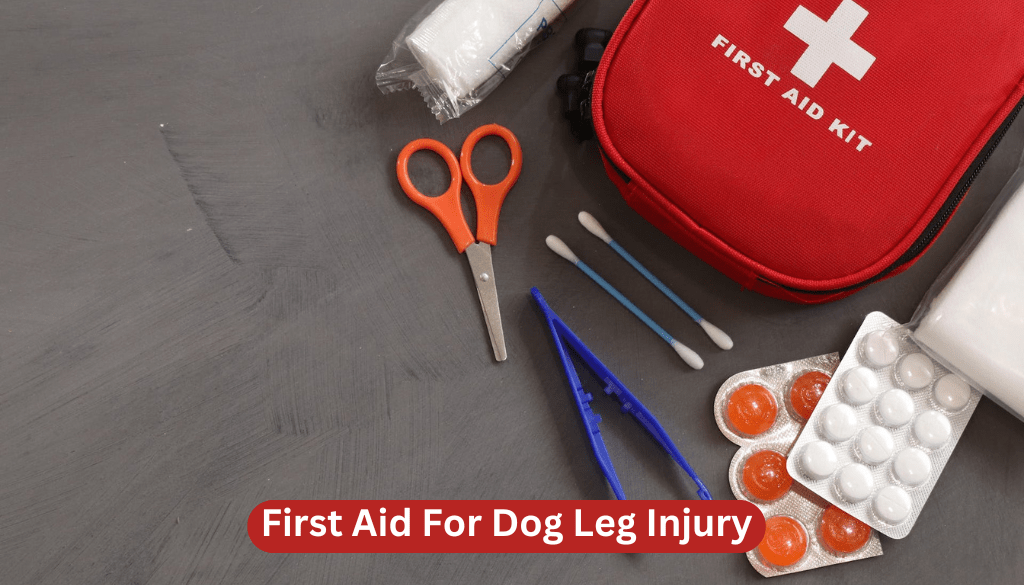
Your dog can injure his leg at any moment, therefore, it’s better to possess a main first aid kit prepared. This will help you handle injuries quickly. Here are the essential items to include:
- Wound Care Supplies: Pack sterile gauze, bandages, antiseptic wipes, and medical tape. These items help stop bleeding and protect wounds from infection.
- Tools for Emergency Handling: Include tweezers to remove splinters or debris and blunt-edged scissors to cut bandages. Also, add a digital thermometer to check for fever or signs of shock.
- Cooling and Comfort Items: Pack a cold compress or ice pack to reduce swelling. Include a soft towel or padding to use as temporary support for an injured leg.
- Saline Solution: Use saline for cleaning wounds or flushing out dirt and debris. It is gentle and safe for pets.
- Emergency Contact Numbers: Keep the phone numbers for your veterinarian and a local emergency pet clinic in the kit. Quick access to these contacts can save valuable time.
Store the kit in a sturdy, waterproof container. Place it in an easily accessible location, and check its contents regularly to replace expired items.
Immediate First Aid for Dog Leg Injury
Providing first aid for dogs right away can help stabilize your furry friend and reduce their pain. Follow these steps for immediate care:
Stay Calm and Assess the Injury
First, move your dog to a quiet, safe space. Check for visible wounds, swelling, or signs of pain. Handle them gently to avoid causing more discomfort.
Control Bleeding
If there’s bleeding, apply gentle pressure with a clean cloth or sterile gauze. Keep pressing until the bleeding stops. Do not remove the cloth if it becomes soaked; instead, add another layer on top.
Immobilize the Leg
Use a rolled towel or a soft splint to stabilize the injured leg. Wrap it gently with a bandage to prevent movement. Also, avoid tightening the bandage too much, as this can restrict blood flow.
Clean and Protect Wounds
Flush any cuts or scrapes with clean water or saline solution. Apply a pet-safe antiseptic and cover the wound with a sterile dressing to protect it from dirt.
Limit Movement
Encourage your dog to stay still. Also, restrict their activity to prevent further injury. Use a leash to control their movement if needed.

Contact Your Vet
Call your veterinarian as soon as possible. Describe the injury and your first aid steps. Follow their advice for the next steps or bring your dog in for an examination.
These actions can make your dog more comfortable and prepare them for professional care. Acting quickly ensures the best outcome for their recovery.
How to Administer First Aid on a Fractured Leg
A fractured leg requires careful handling to prevent further injury. Follow these steps to provide immediate canine first aid:
- Identify the Fracture: Look for swelling, visible deformities, or an inability to put weight on the leg. Your dog may also cry out in pain if the leg is touched.
- Restrict Movement: Keep your dog calm and still, slowly lay them on a plain surface for support. Limit their movement by placing them in a confined area or gently holding them in place.
- Support the Leg: Use a towel or a piece of fabric to wrap around the injured leg. Add padding like soft cloth or cotton rolls around the leg for protection.
- Apply a Splint: Place a rigid object, like a wooden stick or rolled newspaper, alongside the leg for support. Secure the splint with medical tape, wrapping it gently but firmly.
When to Call the Vet
Some leg injuries require immediate veterinary attention. Severe bleeding that does not stop after applying pressure needs professional care to prevent further blood loss or complications.
Visible deformities, such as a bent leg or exposed bone, indicate a serious fracture that requires urgent treatment. Signs of shock, including rapid breathing, pale gums, or lethargy, signal a medical emergency and must be addressed quickly.
Additionally, if your dog refuses to eat, drink, or move for an extended period after the injury, it is crucial to consult your veterinarian. Early intervention ensures your dog receives the necessary care for a safe and effective recovery.
Final Words
Dog leg injuries can be stressful, but quick first aid for dog leg injury can make a huge difference. By acting quickly, you can reduce your dog’s pain and prevent further complications. Being prepared with a first aid kit and knowing the signs of serious injuries are key to effective care.
Be Prepared for Unpredicted Crisis!
At Doctor Pet Hospital in Bahria Town, we offer expert advice and professional treatment for pet injuries. Contact us today for emergency support or to schedule a visit. Your dog’s safety and well-being are our top priorities.