
In several ways, pets act like children and are a special part of our house. Pets bring joy and companionship, but their curiosity can sometimes lead to injuries. From playful mishaps to accidents during outdoor adventures, these injuries can happen quickly. So, it’s better to know how to handle them to make a huge difference. Many common pet injuries are minor and can be treated at home. However, some require immediate attention from a veterinarian. This guide highlights the most common injuries pets face and how to address them effectively. By staying informed, you can protect your furry friend and ensure their well-being.
Most Common Pet Injuries
Pets can face various injuries during their daily activities. Here are some of the most common pet injuries:
Cuts and Scrapes
Sharp objects like glass, thorns, or rough surfaces can cause minor cuts or scrapes. Typically, these injuries often happen during walks or playtime. While they may seem small, untreated cuts can lead to infections.
Sprains and Fractures
Falls jumps from high places, or rough play can result in sprains or fractures. Pets may limp, avoid putting weight on a limb, or show signs of pain. These injuries range from mild to severe and often need a vet’s evaluation.
Bites and Stings
Encounters with other animals or insects can lead to bites or stings. These injuries may cause swelling, redness, or pain. In some cases, they trigger allergic reactions that require urgent care.
Burns
Burns can occur from hot surfaces, spilled liquids, or chemicals. These injuries can vary from minor irritation to severe skin damage. Burns often need quick treatment to avoid complications.
Foreign Object Ingestion
Pets often chew on toys, bones, or household items. Swallowing foreign objects can cause choking or internal blockages. These situations can become emergencies if the object cannot pass naturally.
Torn or Broken Nails
Nails can tear or break during running, climbing, or scratching rough surfaces. This can cause bleeding, pain, or even limping. A torn nail exposes the sensitive quick and increases the risk of infection if not treated.
Abscesses
Abscesses form when bacteria enter a wound, leading to a swollen, painful pocket of pus. These often occur from bites, scratches, or puncture wounds. Abscesses may burst and require immediate cleaning and veterinary care to prevent further infection.
Immediate First Aid for Common Injuries
Quick action can help reduce pain and prevent complications in pets. Here are first-aid steps for common injuries.
For Cuts and Scrapes
Clean the wound with warm water and mild soap to remove dirt. Pat the area dry with a clean cloth. Besides, apply antiseptic and cover the wound with a bandage to keep it clean.
For Sprains and Fractures
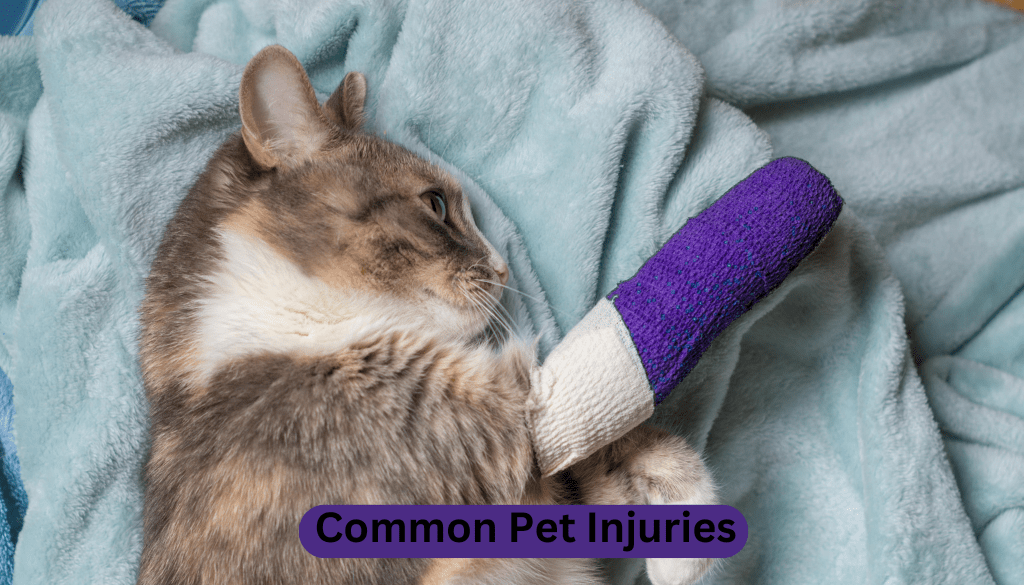
Limit your pet’s movement immediately. Use a soft splint or padding to stabilize the injured limb. Take your pet to the veterinarian for further treatment.
For Bites and Stings
Apply a cold compress to reduce swelling. Check the bite or sting area for signs of redness or discharge. Contact a vet if the swelling worsens or your pet shows signs of an allergic reaction.
For Burns
Rinse the burn with cool water for several minutes to soothe the skin. Do not apply ointments without consulting a vet. Also, keep the burn clean and covered until professional care is available.
For Foreign Object Ingestion
Do not try to force your pet to vomit unless instructed by a veterinarian. Contact your vet immediately and provide details about the object.
For Torn or Broken Nails
Apply pressure to stop bleeding if the nail is torn. Use a pet-safe antiseptic to clean the area. Trim any loose or jagged parts of the nail carefully, then bandage the paw if needed.
For Abscesses
Do not squeeze or puncture an abscess. Gently clean the area with warm water. Contact your vet promptly for proper drainage and antibiotics.

Signs Your Pet Needs Immediate Veterinary Attention
Some common pet injuries require urgent care to prevent complications. Watch for these signs that your pet needs a veterinarian.
- Severe Bleeding: If bleeding does not stop after applying pressure for several minutes, seek veterinary care immediately.
- Difficulty Breathing: Labored breathing, wheezing, or panting can indicate a serious problem and needs urgent attention.
- Visible Bone Fractures: If you see a bone sticking out or the limb is unnaturally bent, contact your vet right away.
- Vomiting or Diarrhea: Frequent episodes, especially with blood, suggest a serious issue and require professional care.
- Behavioral Changes: Lethargy, aggression, or sudden withdrawal may indicate pain or distress that needs veterinary assessment.
Acting quickly ensures your pet gets the care they need to recover safely. Always consult a vet if you’re unsure about the severity of the injury.
Preventing Common Pet Injuries
Preventing injuries helps keep your pet safe and reduces the risk of emergencies. These simple steps can minimize accidents.
Keep Harmful Items Out of Reach
Store cleaning products, medications, and small objects in secure cabinets. Remove sharp or dangerous items from areas your pet can access.
Supervise Outdoor Activities
Watch your pet during walks or playtime. Use leashes or harnesses to maintain control in unfamiliar environments. Besides, keep your pet away from areas with broken glass, sharp objects, or busy roads.
Provide a Safe Home Environment
Use non-slip mats to prevent slips on smooth floors. Secure furniture to avoid tipping. Also, block access to high places where your pet might fall.
Trim Nails Regularly
Keep your pet’s nails trimmed to prevent tearing or breakage. Use a pet-safe nail trimmer and cut carefully to avoid the quick.
Schedule Regular Veterinary Checkups
Routine checkups help detect potential health issues early. Discuss injury prevention tips with your vet during visits.
Final Thoughts
Common pet injuries are unpredictable, but being prepared can make all the difference. Immediate action and proper care ensure a faster recovery for your pet. Simple preventative steps, like creating a safe environment and supervising activities, can reduce the risk of accidents significantly. Staying informed about common injuries helps you act with confidence during emergencies.
Protect Your Pet’s Well-Being Today!
Doctor Pet Hospital in Rawalpindi Bahria Town is here to assist you in managing pet injuries and offering preventative care tips. Our experienced team provides tailored advice, immediate treatment, and ongoing support to keep your pet safe and healthy. Contact us now for expert guidance or to schedule a checkup. Your pet’s safety is our priority!